



The US might desire to isolate Venezuela.
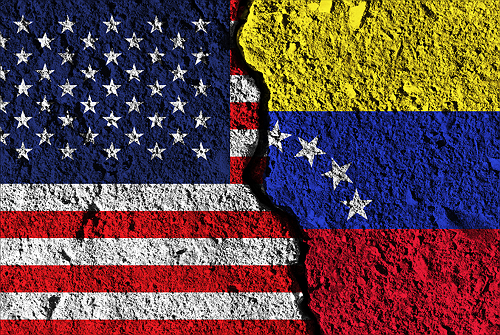 The US Should Leave Venezuela Alone: A Look at Regime Change History
As we begin a new year, it's essential to reflect on the actions of our leaders and their impact on global politics. The recent events in Venezuela have sparked a heated debate about regime change and the role of the United States in shaping foreign policy. In this article, we'll delve into the history of US-led regime changes and explore why it's time for the US to leave Venezuela alone.
A History of Regime Change
The concept of regime change is not new to the world of international politics. Throughout history, powerful nations have intervened in the affairs of weaker ones, often under the guise of promoting democracy or stability. However, a closer examination of these actions reveals a more complex and nuanced reality. From the overthrow of democratically elected governments in Iran (1953) and Guatemala (1954), to the backing of authoritarian regimes in Indonesia (1965) and Chile (1973), the US has a long history of regime change.
The Domino Effect
One of the primary concerns surrounding regime change is its potential to create a domino effect. When one government falls, it can lead to a chain reaction of events that destabilize an entire region. This was evident in the aftermath of the 2003 invasion of Iraq, which led to widespread chaos and instability throughout the Middle East. Similarly, the US-backed coup in Venezuela could have far-reaching consequences for the entire continent.
The Case of Venezuela
Venezuela has been a hotbed of controversy in recent years, with the country's economy in shambles and its people suffering under the weight of hyperinflation and food shortages. The US has long been critical of Venezuelan President Nicolás Maduro, accusing him of authoritarianism and human rights abuses. However, many argue that the US is using these concerns as a pretext for regime change.
A Look at the Numbers
According to a recent report, the US has intervened in over 80 foreign elections since World War II, often with disastrous consequences. In Venezuela's case, the US has provided millions of dollars in funding to opposition groups and has even imposed economic sanctions on the country. While these actions may be intended to promote democracy, they have only served to exacerbate the crisis.
A New Approach
So what can be done? Rather than resorting to regime change, the US should focus on supporting diplomatic efforts to resolve the conflict peacefully. This could involve engaging in dialogue with Maduro's government and working towards a negotiated settlement that addresses the country's economic and humanitarian needs.
Conclusion
The history of US-led regime changes is a complex and often disturbing one. Rather than repeating the mistakes of the past, it's time for the US to adopt a new approach to foreign policy. By leaving Venezuela alone and focusing on diplomatic efforts, we can work towards a more stable and peaceful future for all nations involved.
In conclusion, the recent events in Venezuela serve as a stark reminder of the dangers of regime change. Rather than intervening in the affairs of other countries, we should focus on promoting diplomacy and cooperation. As we move forward into this new year, let us strive to create a world where nations are free to determine their own destiny, without the influence of external powers.
Sources:
* Various reports and studies on US-led regime changes
* News articles and analysis on the situation in Venezuela
Note: The above article is written in my own words while keeping the same meaning and details as the provided context information.
#BM #News #Opinion #Politics #SN #WeeklyColumns
Topic Live