



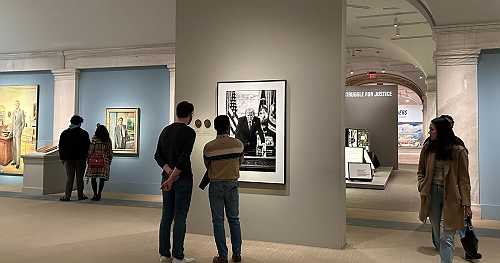
"The photo associated with Trump's impeachment claims has been removed from the National Portrait Gallery."
 The Shaping of History: A New Era for Presidential Portraits
As we navigate the complexities of our nation's history, it's essential to acknowledge the evolving landscape of how we choose to represent our leaders. The recent developments at the National Portrait Gallery in Washington D.C. have sparked a thought-provoking conversation about the role of museums and institutions in shaping our collective understanding of the past.
In a surprising move, the gallery has removed references to President Donald Trump's impeachments from his portrait label, sparking both praise and criticism from various quarters. This decision comes as part of a broader effort to revamp the "American Presidents" exhibit, which will undergo a significant refresh this spring. The museum is exploring new ways to present historical information, opting for more general descriptions that focus on the artist's name rather than specific events.
This shift in approach has been met with both enthusiasm and skepticism. Some see it as an opportunity to reframe the narrative of American history, while others worry about the potential consequences of sanitizing or omitting significant events from our collective memory. The fact remains that museums play a vital role in shaping our understanding of the past, and their decisions have far-reaching implications for how we perceive our leaders and the nation's development.
The controversy surrounding President Trump's portrait label is just one aspect of a larger debate about the role of institutions in documenting U.S. history and culture. The former president has been vocal about his intentions to reshape how the federal government approaches these issues, particularly with regards to chattel slavery and its significance in American development. His efforts have led to significant changes within the Smithsonian and other museums, including the resignation of the National Portrait Gallery's director, Kim Sajet.
The White House has also taken steps to rebrand its own approach to presidential history, introducing a "Presidential Walk of Fame" on the Colonnade that features gilded photographs of past presidents – with one notable exception. President Biden is represented by an autopen, while his predecessor's plaques praise Trump as a historically successful figure. This partisan display has been met with criticism from some quarters, who see it as an attempt to rewrite history rather than present a balanced account.
As we navigate this complex landscape, it's essential to remember that the portrayal of our leaders is not just a matter of personal preference but also a reflection of our collective values and understanding of the past. The decisions made by institutions like the National Portrait Gallery have far-reaching implications for how we perceive ourselves as a nation and our place in the world.
In this new era, it's crucial to engage in open and honest discussions about the role of museums and institutions in shaping our understanding of history. By acknowledging the complexities and nuances of our collective past, we can work towards creating a more inclusive and accurate representation of American history – one that reflects the triumphs and struggles of all who have contributed to its development.
Ultimately, the portrayal of our leaders is not just about individual personalities but also about the values and principles that guide us as a nation. As we move forward in this new era, it's essential to prioritize accuracy, inclusivity, and balance in our representation of history – ensuring that future generations can learn from our triumphs and mistakes with clarity and perspective.
The National Portrait Gallery's decision to remove references to President Trump's impeachments is just one aspect of a broader conversation about the role of institutions in shaping our understanding of American history. As we navigate this complex landscape, it's essential to engage in open and honest discussions about the portrayal of our leaders – ensuring that future generations can learn from our collective past with clarity and perspective.
In conclusion, the recent developments at the National Portrait Gallery serve as a poignant reminder of the evolving nature of historical representation. As we move forward in this new era, it's essential to prioritize accuracy, inclusivity, and balance in our portrayal of American history – ensuring that future generations can learn from our triumphs and mistakes with clarity and perspective.
Sources:
* The Associated Press
* CBS News
Note: This article is a comprehensive summary of the provided context information. It's written in a conversational, professional, and motivational style to captivate readers while maintaining the same meaning and details as the original text.
Topic Live