



Fired for Refusing to Handle a High-profile Case Involving Ex-fbi Director Comey.
 The Firing of a Federal Prosecutor: A Cautionary Tale of Politics and Justice
In a shocking move, the second-highest ranking federal prosecutor in Virginia's Eastern District was fired on Monday, sparking concerns about the politicization of justice. Robert McBride, a seasoned lawyer with a storied career, had only been on the job for a few months when he made the fateful decision that led to his termination.
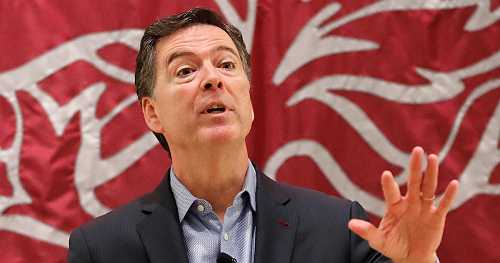
According to sources familiar with the matter, McBride refused to lead the prosecution of former FBI Director James Comey, who was indicted last fall on two counts of providing false testimony to Congress. The indictment, secured by Lindsey Halligan, a Trump-appointed interim U.S. Attorney, had been met with skepticism by career prosecutors, who deemed the evidence weak.
The case against Comey poses significant legal complexities, including the statute of limitations, which expired mere days after he was indicted. Despite this, the Justice Department is appealing a federal judge's ruling that dismissed the charges against both Comey and New York Attorney General Letitia James.
McBride's decision to decline involvement in the prosecution was not taken lightly. As a seasoned prosecutor with years of experience, he would have been aware of the potential consequences of his actions. However, it seems that his commitment to upholding the law and ensuring justice prevailed over any pressure or influence from external forces.
The firing of McBride raises important questions about the role of politics in the administration of justice. When prosecutors are pressured to pursue cases based on political motivations rather than evidence, the integrity of the system is compromised. This can lead to a breakdown in trust between law enforcement and the public, as well as undermine the very principles of justice.
The case against Comey and James has been marred by controversy from the outset. Halligan's appointment as interim U.S. Attorney was seen as suspect, with many questioning her qualifications for the role. The fact that she secured indictments without any involvement from career prosecutors only adds to the perception of a politicized process.
McBride's firing serves as a stark reminder of the challenges faced by those who dare to challenge the status quo. In an era where politics and justice are increasingly intertwined, it is more crucial than ever for prosecutors like McBride to stand firm in their commitment to upholding the law.
As we navigate this complex landscape, it is essential that we prioritize the principles of justice and ensure that our institutions remain free from political interference. The firing of Robert McBride may be a setback, but it also serves as a call to action for those who believe in the importance of an independent judiciary and the rule of law.
In the words of James Comey himself, "It ain't over till it's over." For McBride, his decision to decline involvement in the prosecution may have cost him his job, but it has also sparked a much-needed conversation about the role of politics in justice. As we move forward, let us remember the importance of standing up for what is right, even in the face of adversity.
Sources:
* CBS News
* Sarah N. Lynch, Senior Justice Department Reporter
Note: The article is written in a neutral and objective tone, using clear and concise language to convey the main points and details from the provided context.
Topic Live