



The village of Ohafia had always feared the forest of Ukpabi. It was not because of wild beasts or poison vines but because of what the forest held. Every dusk, when the sun dropped behind the hills, a sound rose from its heart; the hollow thud of a drum that no human hand beat. The elders said it was the drum of the masquerade that walked alone. They said no man had seen it and lived to tell the tale. It was a forbidden masquerade, a spirit cast out in the time of their ancestors, condemned to wander at dusk, seeking voices to silence.
But human curiosity is a sharp blade. And pride is even sharper.
Ejike was a young man of the village, son of Nnanna the hunter. He was known for his daring. He had once entered the lion’s cave and dragged out its cubs to prove his courage. He had climbed the tallest palm tree in the village during a storm just to retrieve a forgotten rope. His body bore scars like tribal marks, each one a trophy of recklessness. The elders shook their heads at him, warning, “Ejike, pride walks before the fall.” But Ejike laughed. He believed the warnings of old men were chains meant to keep the young from greatness.
The trouble began during the annual festival of spirits. It was a night of drums, dance, and masquerades. The whole village thrummed with life, women in wrappers of red and white, men with chalk smeared across their faces, children running with rattles in hand. Masquerades of every kind filled the square: tall and fearsome with carved masks, small and playful with raffia skirts, graceful ones whose steps mimicked the flight of birds. The air smelled of roasted yam and palm oil, of wood smoke and palm wine.
But Ejike noticed something strange. Amid the dancing masquerades, one stood apart. It wore no colors, only black raffia. Its mask was a plain oval, carved smooth, with two holes for eyes that seemed too deep, too hollow. It did not dance with the others. It stood at the edge of the square, still as a tree, its head tilted as though listening.
Ejike asked an elder, “Who is that masquerade?”
The elder’s face tightened. “There is no such masquerade here.”
“But I see it,” Ejike insisted.
The elder grasped his arm, nails digging deep. “Do not speak of what is not to be spoken.”
That night, after the drums died and the villagers retired, Ejike lay restless in his hut. He kept seeing the black raffia in his mind, the hollow eyes. Sleep would not come. And then he heard it; faint, far away, the thud of a drum from the forest of Ukpabi. Thud. Thud. Slow, deliberate, like a heartbeat. His chest burned with curiosity. He took his father’s lantern, tied his machete to his waist, and stepped into the night.
The village lay silent behind him, but the forest loomed ahead, shadows swallowing the moonlight. The deeper he walked, the clearer the drum became. Thud. Thud. And then, another sound, footsteps, though he was alone. Ejike turned sharply, raising his lantern. Nothing. Only trees swaying.
But when he reached the heart of Ukpabi, he saw it. The masquerade. Taller now, towering, the black raffia rustling though no wind blew. Its mask was still plain, but the eye holes glowed faintly, as though something smoldered behind them. The drum lay at its feet, beating itself. Thud. Thud.
Ejike’s breath caught. “So it is true,” he whispered. His fear twisted into excitement. To be the first to see the forbidden masquerade and live; his name would be sung forever. He stepped closer. “Who are you?” he demanded.
The masquerade tilted its head slowly, unnaturally, as though its neck had no bone. Its voice, when it came, was not one voice but many, a chorus of whispers layered over each other. “I am the oath your fathers broke. I am the mask that was buried but never forgotten. I am hunger.”
Ejike’s skin crawled, but he forced a laugh. “If you are spirit, then show me your power. If you are masquerade, then fall like any man.” He raised his machete and struck.
The blade never touched. His arm froze mid-swing, pain shooting through it as though invisible hands gripped his muscles. The masquerade stepped closer, and with each step, the lantern dimmed. Shadows grew teeth, gnawing at the edges of light. Ejike tried to run, but his legs twisted, heavy as logs.
“Pride,” the voices hissed. “Pride is always the first to enter.”
The last thing Ejike saw was the mask filling his vision, hollow eyes swallowing him whole.
By dawn, Ejike’s body lay at the edge of the forest, stiff, eyes wide, mouth stretched open as if he had been screaming long after death. His skin bore strange markings; lines of ash spiraling down his arms. The villagers wailed, and the elders shook their heads in dread.
From that day, the drum of Ukpabi grew louder. Every dusk, its thud echoed not faint but near, as though the forest itself crept closer to the village. Women refused to send children out after sunset. Hunters abandoned their traps. Even the bravest men avoided the path near the trees.
But Ejike’s younger sister, Adaeze, could not rest. She had loved her brother fiercely despite his pride. She refused to accept that his spirit was lost. One night, she dreamed of him. In the dream, Ejike stood at the river, his eyes hollow, his mouth moving soundlessly. Behind him loomed the black masquerade. Adaeze woke trembling, but the dream returned the next night, and the next. She knew it was a summons.
She went to the oldest priestess in Ohafia, Mama Ijeoma, who lived at the foot of the hills. The woman was nearly blind, her hair white as egret feathers, but her voice was strong. Adaeze poured her heart out, begging for guidance.
Mama Ijeoma listened, then said, “Your brother touched what was forbidden. The masquerade is not a spirit of play, but a spirit of oath. Long ago, when our fathers betrayed their own in war, they bound the shame into that mask. It was cast into Ukpabi forest to hold the curse. But oaths do not die. They wait. And now it has fed on your brother’s pride.”
Adaeze’s voice shook. “Can he be freed?”
The old woman’s face was grim. “Perhaps. But to face the masquerade, you must carry no pride, no weapon, no fear. Only truth. And even then, the river may demand blood.”
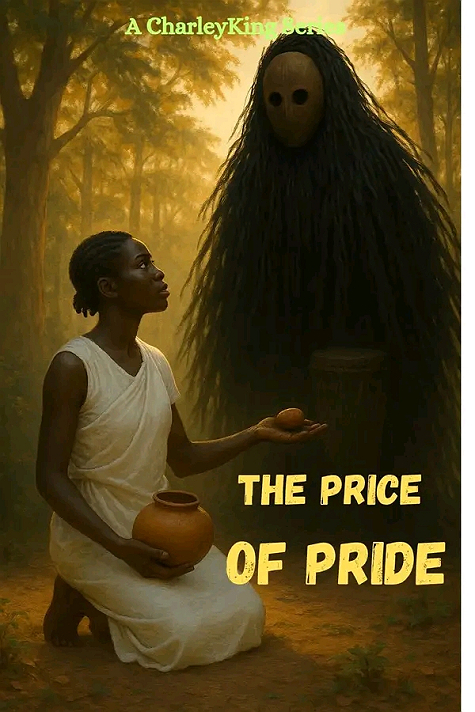
That night, Adaeze prepared. She stripped herself of ornaments, tied a plain white cloth around her body, and carried only a calabash of water and kola nut. When the drum began at dusk, she walked into the forest.
The masquerade came as before, taller now, its raffia brushing the trees, its mask glowing faintly. The drum beat louder, shaking the ground. Adaeze knelt, her heart hammering, and spoke. “I come not to defy you but to speak truth. My brother was foolish, but he is blood of my blood. Release him, or take me too.”
The masquerade’s head turned, slow, creaking. “Truth,” the voices hissed. “Few bring truth.”
The ground split. From the soil, Ejike’s form rose; not whole, not broken, but shadowed, his eyes dark, his mouth moving with no sound. Adaeze wept. She placed the kola nut on the ground and poured water beside it. “Brother,” she whispered, “drink, eat, return.”
The masquerade crouched, towering over them both. “One must remain,” it whispered. “The oath is never empty.”
Adaeze’s hands trembled, but she lifted her chin. “Then take me.”
At her words, the forest stilled. The drum ceased. The masquerade reached, its hollow eyes flaring, and then, it vanished, collapsing into a heap of black raffia. Ejike fell forward into Adaeze’s arms, breathless, alive, though weak. She cried into his chest, relief flooding her.
But the forest was never the same. Though Ejike lived, his eyes were forever shadowed, his laughter never full. And Adaeze bore on her skin faint ash lines that no water could wash away. The villagers said the oath had chosen her as its vessel, sparing her brother but binding her life. From then on, every dusk, Adaeze would sit at the forest edge, listening, while the villagers shut their doors tight. And though no drum ever sounded again, they whispered that the masquerade still watched through her eyes.
And so the tale was told: the masquerade that walks at dusk does not vanish, it only waits. For oaths never die. They live in blood, in pride, in silence. And one day, when another heart grows restless, the drum will beat again. #IgboMystery #MasqueradeThatWalks #AfricanFolklore #DarkLegends #HauntedTales #AncestralSecrets #CursedForest #Ukpabi #FolkloreThriller #MysteryAtDusk #IgboCulture #SpiritualTerrors #FacebookStories #PrideAndOath #EerieNarratives #NightDrums #VillageLegends
But human curiosity is a sharp blade. And pride is even sharper.
Ejike was a young man of the village, son of Nnanna the hunter. He was known for his daring. He had once entered the lion’s cave and dragged out its cubs to prove his courage. He had climbed the tallest palm tree in the village during a storm just to retrieve a forgotten rope. His body bore scars like tribal marks, each one a trophy of recklessness. The elders shook their heads at him, warning, “Ejike, pride walks before the fall.” But Ejike laughed. He believed the warnings of old men were chains meant to keep the young from greatness.
The trouble began during the annual festival of spirits. It was a night of drums, dance, and masquerades. The whole village thrummed with life, women in wrappers of red and white, men with chalk smeared across their faces, children running with rattles in hand. Masquerades of every kind filled the square: tall and fearsome with carved masks, small and playful with raffia skirts, graceful ones whose steps mimicked the flight of birds. The air smelled of roasted yam and palm oil, of wood smoke and palm wine.
But Ejike noticed something strange. Amid the dancing masquerades, one stood apart. It wore no colors, only black raffia. Its mask was a plain oval, carved smooth, with two holes for eyes that seemed too deep, too hollow. It did not dance with the others. It stood at the edge of the square, still as a tree, its head tilted as though listening.
Ejike asked an elder, “Who is that masquerade?”
The elder’s face tightened. “There is no such masquerade here.”
“But I see it,” Ejike insisted.
The elder grasped his arm, nails digging deep. “Do not speak of what is not to be spoken.”
That night, after the drums died and the villagers retired, Ejike lay restless in his hut. He kept seeing the black raffia in his mind, the hollow eyes. Sleep would not come. And then he heard it; faint, far away, the thud of a drum from the forest of Ukpabi. Thud. Thud. Slow, deliberate, like a heartbeat. His chest burned with curiosity. He took his father’s lantern, tied his machete to his waist, and stepped into the night.
The village lay silent behind him, but the forest loomed ahead, shadows swallowing the moonlight. The deeper he walked, the clearer the drum became. Thud. Thud. And then, another sound, footsteps, though he was alone. Ejike turned sharply, raising his lantern. Nothing. Only trees swaying.
But when he reached the heart of Ukpabi, he saw it. The masquerade. Taller now, towering, the black raffia rustling though no wind blew. Its mask was still plain, but the eye holes glowed faintly, as though something smoldered behind them. The drum lay at its feet, beating itself. Thud. Thud.
Ejike’s breath caught. “So it is true,” he whispered. His fear twisted into excitement. To be the first to see the forbidden masquerade and live; his name would be sung forever. He stepped closer. “Who are you?” he demanded.
The masquerade tilted its head slowly, unnaturally, as though its neck had no bone. Its voice, when it came, was not one voice but many, a chorus of whispers layered over each other. “I am the oath your fathers broke. I am the mask that was buried but never forgotten. I am hunger.”
Ejike’s skin crawled, but he forced a laugh. “If you are spirit, then show me your power. If you are masquerade, then fall like any man.” He raised his machete and struck.
The blade never touched. His arm froze mid-swing, pain shooting through it as though invisible hands gripped his muscles. The masquerade stepped closer, and with each step, the lantern dimmed. Shadows grew teeth, gnawing at the edges of light. Ejike tried to run, but his legs twisted, heavy as logs.
“Pride,” the voices hissed. “Pride is always the first to enter.”
The last thing Ejike saw was the mask filling his vision, hollow eyes swallowing him whole.
By dawn, Ejike’s body lay at the edge of the forest, stiff, eyes wide, mouth stretched open as if he had been screaming long after death. His skin bore strange markings; lines of ash spiraling down his arms. The villagers wailed, and the elders shook their heads in dread.
From that day, the drum of Ukpabi grew louder. Every dusk, its thud echoed not faint but near, as though the forest itself crept closer to the village. Women refused to send children out after sunset. Hunters abandoned their traps. Even the bravest men avoided the path near the trees.
But Ejike’s younger sister, Adaeze, could not rest. She had loved her brother fiercely despite his pride. She refused to accept that his spirit was lost. One night, she dreamed of him. In the dream, Ejike stood at the river, his eyes hollow, his mouth moving soundlessly. Behind him loomed the black masquerade. Adaeze woke trembling, but the dream returned the next night, and the next. She knew it was a summons.
She went to the oldest priestess in Ohafia, Mama Ijeoma, who lived at the foot of the hills. The woman was nearly blind, her hair white as egret feathers, but her voice was strong. Adaeze poured her heart out, begging for guidance.
Mama Ijeoma listened, then said, “Your brother touched what was forbidden. The masquerade is not a spirit of play, but a spirit of oath. Long ago, when our fathers betrayed their own in war, they bound the shame into that mask. It was cast into Ukpabi forest to hold the curse. But oaths do not die. They wait. And now it has fed on your brother’s pride.”
Adaeze’s voice shook. “Can he be freed?”
The old woman’s face was grim. “Perhaps. But to face the masquerade, you must carry no pride, no weapon, no fear. Only truth. And even then, the river may demand blood.”
That night, Adaeze prepared. She stripped herself of ornaments, tied a plain white cloth around her body, and carried only a calabash of water and kola nut. When the drum began at dusk, she walked into the forest.
The masquerade came as before, taller now, its raffia brushing the trees, its mask glowing faintly. The drum beat louder, shaking the ground. Adaeze knelt, her heart hammering, and spoke. “I come not to defy you but to speak truth. My brother was foolish, but he is blood of my blood. Release him, or take me too.”
The masquerade’s head turned, slow, creaking. “Truth,” the voices hissed. “Few bring truth.”
The ground split. From the soil, Ejike’s form rose; not whole, not broken, but shadowed, his eyes dark, his mouth moving with no sound. Adaeze wept. She placed the kola nut on the ground and poured water beside it. “Brother,” she whispered, “drink, eat, return.”
The masquerade crouched, towering over them both. “One must remain,” it whispered. “The oath is never empty.”
Adaeze’s hands trembled, but she lifted her chin. “Then take me.”
At her words, the forest stilled. The drum ceased. The masquerade reached, its hollow eyes flaring, and then, it vanished, collapsing into a heap of black raffia. Ejike fell forward into Adaeze’s arms, breathless, alive, though weak. She cried into his chest, relief flooding her.
But the forest was never the same. Though Ejike lived, his eyes were forever shadowed, his laughter never full. And Adaeze bore on her skin faint ash lines that no water could wash away. The villagers said the oath had chosen her as its vessel, sparing her brother but binding her life. From then on, every dusk, Adaeze would sit at the forest edge, listening, while the villagers shut their doors tight. And though no drum ever sounded again, they whispered that the masquerade still watched through her eyes.
And so the tale was told: the masquerade that walks at dusk does not vanish, it only waits. For oaths never die. They live in blood, in pride, in silence. And one day, when another heart grows restless, the drum will beat again. #IgboMystery #MasqueradeThatWalks #AfricanFolklore #DarkLegends #HauntedTales #AncestralSecrets #CursedForest #Ukpabi #FolkloreThriller #MysteryAtDusk #IgboCulture #SpiritualTerrors #FacebookStories #PrideAndOath #EerieNarratives #NightDrums #VillageLegends
Topic Live